
Fort Lauderdale Truck Accident Lawyer: Get the Compensation You Deserve
Have you or a loved one been injured in a truck accident in Fort Lauderdale? Every year, more than 500,000 large truck accidents occur in the U.S.—and crashes involving 18-wheelers or tractor trailers often result in devastating injuries and property damage due to their massive size and weight. Even a “minor†collision can lead to life-changing consequences.
At Maus Law Firm, our experienced Fort Lauderdale truck accident attorneys understand what you’re facing. We fight for full and fair compensation—so you can focus on healing while we handle the rest.
Why Choose Maus Law Firm for Your Truck Accident Case?
- Local expertise in Fort Lauderdale truck accident law
- Proven track record securing top settlements for accident victims
- No fee unless you win—zero upfront costs
- Personalized attention and compassionate support through every step
What to Do After a Truck Accident:
- Seek medical attention immediately—even if injuries seem minor
- Collect evidence and document the scene if possible
- Contact a trusted Fort Lauderdale truck accident lawyer for a free consultation
Don’t wait—Florida law limits the time you have to file a claim. Let our team pursue justice and maximum compensation on your behalf.
Give the Maus Law Firm a call today for your free, no-obligation case review.
How the Government Tries to Prevent Truck Accidents
The primary authority for trucking regulations is the Federal Motor Carrier Safety Administration (FMCSA), which is part of the United States Department of Transportation (DOT). The FMCSA is also known as the truck and bus “Safety Agencyâ€. The FMCSA’s primary mission is to reduce crashes, injuries, and fatalities involving commercial motor vehicles including 18-Wheelers and buses. FMCSA requires trucking companies and their drivers to ensure the safety of their trucks.  Safety inspections need to be performed on a daily basis. The loading of the trucks is also critically important as the weight on the trailer must be properly distributed and secured to avoid an 18-Wheeler rolling over during an accident.
DOT and FMCSA have established guidelines to ensure that trucking companies that operate such large vehicles on the highways operate them safely. The Department of Transportation conducts random checks and audits with trucking companies to ensure that the trucking companies are complying with the many DOT regulations. If it is found that a trucking company has not complied with the Department of Transportation and FMCSA regulations, the company can be hit with very large fines. In fact, the FMCSA levies hundreds of thousands of dollars of fines each year for violations of the DOT regulations. Among other things, the regulations require:
- A systematic inspection, repair and maintenance of all vehicles;
- The drivers hold Commercial Driver’s Licenses and for bus drivers, Commercial Driver’s Licenses with a “passenger†endorsement;
- The drivers hold valid medical certificates;
- The company has a driver drug/alcohol testing program that complies with the Department of Transportation regulations;
- The trucking company put limits on how long a driver may drive, basically not more than ten (10) hours following eight (8) consecutive hours of being off duty; and
- The trucking company’s drivers exceed the “70 hour ruleâ€, which limits drivers to seventy (70) hours of work/driving time within eight (8) consecutive days.
Truck Load Limits and Liability in 18-Wheeler Accidents
Strict federal and state regulations are also in place regarding how much cargo a truck can safely carry and how that cargo must be loaded. The weight of an 18-wheeler and the way its cargo is distributed directly affect its stability, braking distance, and overall safety on the road.
When a trucking company or driver ignores these maximum allowable load limits, they are not only violating FMCSA and DOT rules—they are also putting everyone on the highway at risk. Overloaded trucks are prone to tire blowouts and rollovers and may spill cargo onto the roadway. If an accident is caused by a truck carrying more weight than permitted, or by debris falling off due to improper load securement, this can be strong evidence of negligence.
In these situations, any violation of weight restrictions or cargo rules can be used to support your claim against the truck driver and the trucking company. Proving that the truck exceeded legal weight limits or that cargo was not properly secured is often a key step in building a case for compensation.
Signage and Warning Requirements for Towing Trucks
When a truck is towing a trailer or another vehicle, federal and state laws set out specific requirements to keep other motorists safe. These regulations demand that certain warning devices and signs be used. For example, trucks must display highly visible markers—such as reflective triangles, warning flags, or illuminated lights—especially when the vehicle or its load overhangs or extends from the truck’s body. You might also see signs that caution “Wide Load†or “Stay Back,†serving as extra notice for anyone following behind.
In addition, the Federal Motor Carrier Safety Administration requires that these warning devices be properly maintained and visible, particularly at night or in low-visibility conditions. Failure to display these notices can result in significant fines and may contribute to liability if an accident occurs.
These rules were created in order to make sure truck drivers are properly trained and aren’t facing circumstances that can lead to an accident. That said, negligence is still far too common. Since it’s possible for you to sue the truck driver and his/her place of employment, it’s best to contact a Fort Lauderdale truck accident lawyer to make sure you make a claim for all possible compensation.
Conditions that May Cause an 18-Wheeler Accident
There are many ways that you, when driving your automobile or SUV can become involved in an 18-wheeler accident. An 18-wheel tractor trailer is commonly known as an 18-wheeler. When fully loaded, an 18-wheeler can weigh as much as 10 times as much as some automobiles and you don’t need a degree in physics to imagine the catastrophic damages that can occur in a collision. There are three types of 18-wheeler accidents that cause the highest percentage of fatalities on our Florida highways.
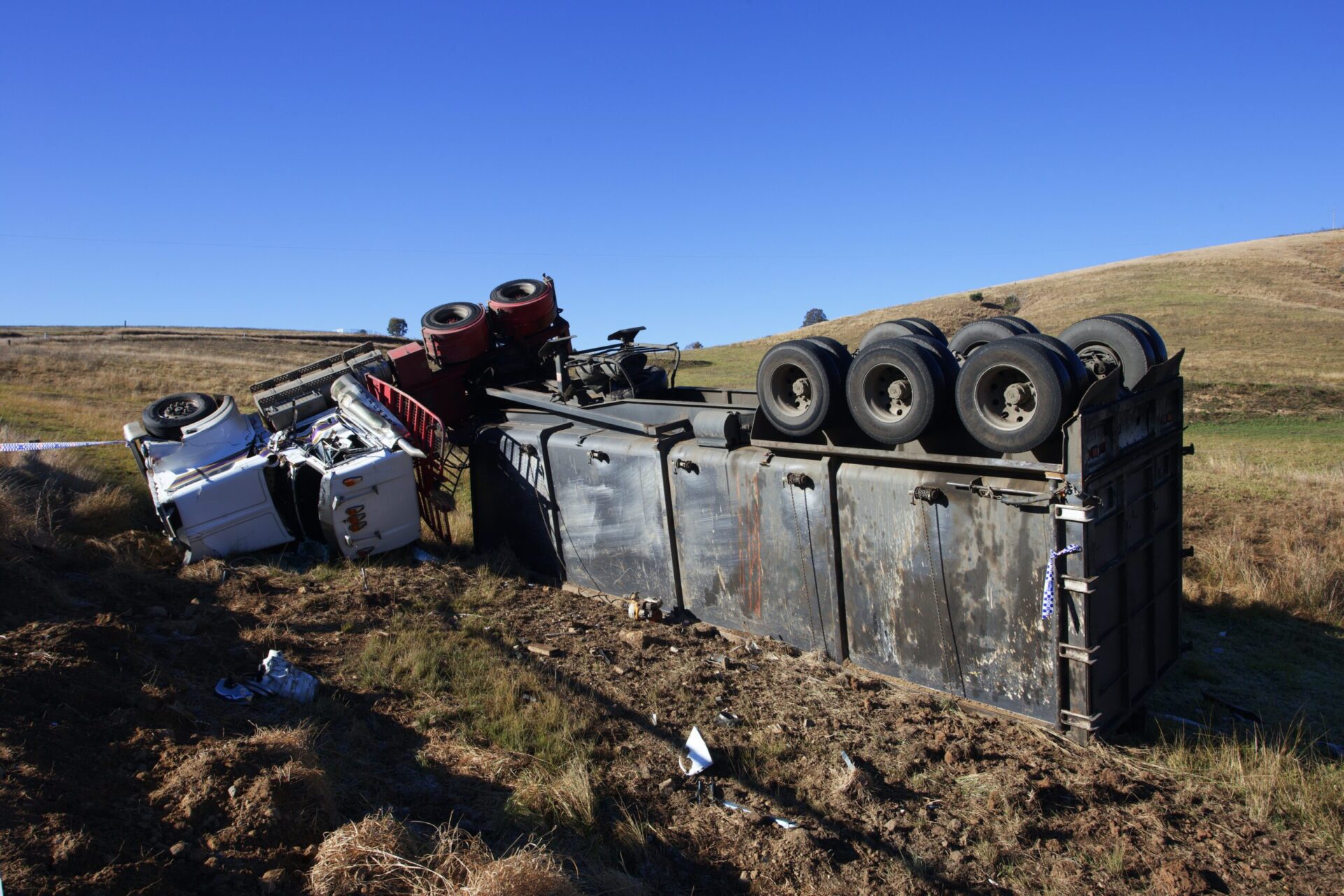
Image: truck accident- captured by sephen tafra- fort lauderdale truck accident attorney
“Rear-Ending†a Parked 18-Wheeler
One of the most violent collisions that can occur when driving on Florida’s main artillery highways like I-95 or I-10 is when a passenger vehicle smashes into the back of a parked 18-wheeler. Tractor trailers sometimes have to make stops along the side of the road for repairs like fixing a flat tire and there is not always enough shoulder to accommodate the width of the truck. An oncoming motor vehicle can clip one half to two thirds of the right side of their car on the rear left of the trailer and shear the upper half of the car clean off. These collisions usually happen when the car is traveling at high speed as the stopped tractor trailer is completely unexpected.
“Right-Hand†Turns
When an 18-wheeler has to make a right hand turn on a city or local road it first has to pull into the left-hand land to accommodate the length of the vehicle and its’ turning radius. Impatient motor vehicle operators often fail to observe the right turn signal and try to pass the 18-wheeler on the right just as the truck is about to make the turn. When this occurs the back half of the trailer will run right over top of the vehicle like a mere bump in the road, crushing and killing the inhabitants of the automobile.
Improper Loading of Tractor Trailer
If an 18-wheeler is not loaded properly and the cargo secured to the floor of the trailer, the load can shift when the vehicle goes around a bend in the highway causing the vehicle to tip-over. If you are in a motor vehicle on the side of the tractor trailer when such a load shift occurs you could be forced off of the highway or crushed beneath the load of the trailer.
The Dangers of Distracted and Impaired Truck Driving
While improper loading and hazardous right turns are textbook truck accident scenarios, they’re far from the only threats on Florida roads. Far too many crashes trace back to distraction or impairment behind the wheel—both of which can turn a routine delivery into a life-altering disaster in seconds.
Truck drivers, just like motorists everywhere, face temptations from their smartphones—texting, browsing maps, or even making calls—despite strict laws like Florida’s ban on texting while driving. Even a split second of looking away from the road can cause an 18-wheeler to drift across lanes or miss slowing traffic.
Alcohol or drug use behind the wheel of a massive vehicle dramatically multiplies the risk. Reaction times plummet, judgment falters, and coordination suffers. Whether the impairment comes from a few beers, prescription painkillers, or illegal substances, the result is the same: a driver who is not fully in control of their rig. Given the sheer size and momentum of these trucks, any lapse—however brief—can lead to a catastrophe.
Add to that the unique fatigue that comes with long shifts and overnight hauls, and it’s clear why both federal regulations and trucking companies themselves have zero tolerance for driving under the influence or operating while distracted. Every responsible driver, whether in a sedan or an 18-wheeler, must recognize that taking their eyes or mind off the road—or driving impaired—endangers everyone around them.
Types of Truck Accident Cases a Lawyer Can Handle
A seasoned truck accident lawyer is equipped to handle an array of cases involving commercial vehicles on Florida’s bustling highways and city streets. These cases extend beyond just the classic 18-wheeler collisions and cover a spectrum of scenarios and vehicle types, including:
- Commercial Vehicles:Â Semi-trucks, garbage trucks, dump trucks, flatbeds, tow trucks, car carriers, pick-ups, delivery vans, and even specialized vehicles like fire trucks and ambulances.
- Varied Collision Types: Whether it’s a rear-end collision on I-95, a head-on crash on rural routes, a T-bone in a busy intersection, sideswipe near a construction zone, or multi-vehicle pile-ups, each case brings its own unique circumstances and challenges.
- Equipment and Mechanical Failures: Lawyers frequently tackle claims arising from rollover accidents, tire blowouts, faulty brakes, load shifts or unsecure cargo, and malfunctions tied to defective parts—like tires, seat belts, airbags, or child safety seats.
- Driver Negligence and Distractions:Â Cases also stem from driver errors such as speeding, fatigue, intoxication (alcohol or drugs), texting or cell phone use, and generally distracted or reckless behaviors behind the wheel.
- Hazardous Road Conditions: Sometimes, it’s not the truck or driver but the road itself to blame—poorly designed intersections, inadequate signage, or construction hazards that turn ordinary routes hazardous.
- Special Circumstances:Â Hit-and-run incidents, road-rage encounters, accidents injuring passengers, or pile-ups involving multiple vehicles also fall within the expertise of truck accident lawyers.
Given the diversity of possible causes—be it mechanical faults, driver error, or treacherous road conditions—an experienced truck accident attorney is prepared to investigate every angle to help victims pursue rightful compensation.
How Defective Truck Equipment Contributes to Accidents
It’s not just driver error or poor road conditions that can trigger catastrophic 18-wheeler accidents—sometimes the culprit is lurking beneath the hood, in the tires, or even in the safety features designed to protect us. When parts like tires, airbags, or seatbelts are defective, they can turn a manageable incident into a disaster in the blink of an eye.
- Tire Failures: Imagine barreling down I-95 when a truck’s tire—manufactured by a well-known brand, no less—suddenly blows out due to a hidden defect. Tire blowouts are notorious for causing a driver to lose control, cross lanes, or even jackknife, posing serious risks to everyone nearby.
- Faulty Airbags and Seatbelts: Truck accidents are already dangerous enough, but defective safety equipment only magnifies the hazard. Airbags that fail to deploy, or seatbelts that don’t properly restrain, leave drivers and passengers vulnerable to severe injuries or worse.
- Child Safety Seats: Trucks sometimes carry families, and when children’s car seats are poorly designed or manufactured, the risk to young passengers increases significantly during a crash.
- Other Equipment Defects: Issues with brakes, lighting systems, or trailer couplings can have equally grave consequences. Even a minor flaw in truck design or manufacturing—whether from a global brand or a major parts supplier—can be just as deadly as driver distraction.
Defective equipment introduces a layer of risk that drivers and other road users simply can’t anticipate. That’s why investigating the possibility of parts failure, recalls, or design flaws is a crucial step when figuring out what really caused an 18-wheeler crash.
Truck Design and Manufacturing Defects in Roll-Over Accidents
Another factor that can contribute to devastating truck accidents involves the design and manufacturing of the 18-wheeler itself. Some tractor-trailers, particularly those with a high center of gravity, are inherently more susceptible to rolling over—especially during sudden turns, evasive maneuvers, or when the road is slick. This top-heavy design can cause a truck to lose stability and tip onto its side, endangering everyone nearby.
If a roll-over occurs due to a flaw in the truck’s engineering—such as improper weight distribution, inadequate suspension, or other design oversights—then the truck’s manufacturer or the company responsible for assembling the vehicle may be liable. In these situations, a claim can potentially be filed against the manufacturer for producing a vehicle that was unsafe for use on public roads. Holding these companies accountable is just as important as investigating driver error or poor maintenance, particularly when a defect played a direct role in causing an accident.
The Role of Defective Roadway Construction or Design
Truck accidents aren’t always the direct result of driver error or poor judgment behind the wheel. Sometimes, the very roads we rely on contribute to catastrophic crashes, especially for big rigs. Defective roadway construction or poor road design can make travel far more hazardous than it should be.
For example, you might be cruising down I-75 or threading your way through a construction zone when suddenly a sharp, unmarked curve, crumbling pavement, or poorly banked turn appears. An 18-wheeler—heavier, taller, and far less agile than your average sedan—may be unable to recover in time. When a highway’s design doesn’t take into account the size and stopping power of commercial vehicles, or when basic maintenance is neglected, a single swerve, pothole, or hidden drop-off can spell disaster.
Common roadway issues that impact truck accidents include:
- Inadequate warning signs before sharp curves or steep grades
- Lack of proper lighting in high-traffic or construction areas
- Faulty guardrails or missing barriers
- Uneven or loose pavement, especially dangerous for trucks with heavy loads
- Poorly marked or abrupt lane shifts
When a crash happens under these circumstances, blame doesn’t fall solely on the driver or the trucking company. Contractors, designers, or even government agencies responsible for the road’s upkeep can sometimes share liability. This added complexity means that truck accident cases often require a thorough investigation not just of the vehicles and drivers involved, but the very road itself.
How Your Fort Lauderdale Truck Accident Attorney Will Prove Liability
It is critical in evaluating a trucking accident to evaluate whether the trucking company, and its driver complied with all DOT regulations. It is also critical to investigate whether the trucking company itself has been the focus of a FMCSA investigation, whether it has ever previously been fined by the FMCSA, or whether it was fined as a result of your trucking accident. Information collected by the FMCSA can provide valuable insight as to the cause of an accident.
A trucking accident needs to be thoroughly investigated immediately after the accident happens. With time, witnesses disappear and memories fade, and valuable evidence can be lost. To properly investigate a trucking accident, your Fort Lauderdale truck accident attorney will review the minimum safety standards that trucking and motor coach companies must follow for operation of their vehicles, and the physical qualifications and operating rules for their drivers. Another valuable source of information on trucking accidents is the “black box†which is often found in newer models of trucks. It can reveal information on the speed, weight and maintenance of the truck. However, it requires a party to move quickly before it is destroyed in order to obtain as much information about the trucking accident as possible.
The Role of Truck Maintenance in Establishing Fault
Another critical factor your attorney will examine is whether the truck involved was properly maintained. Eighteen-wheelers are complex machines that demand vigilant upkeep—from regular brake checks to tire inspections and engine servicing. When maintenance is neglected by the driver, owner, or trucking company, crucial safety systems can fail at the worst possible moment.
If poor upkeep—such as worn-out brakes, faulty lights, or bald tires—contributes to a crash, this lapse can serve as strong evidence of negligence. The law recognizes that failing to maintain a commercial vehicle as required by DOT and FMCSA rules puts everyone on the road at risk. Demonstrating a history of missed maintenance or ignored repairs can be a pivotal part of showing liability after an accident.
Negligent Hiring and Retention: Another Path to Liability
Sometimes, truck accidents stem not only from the immediate actions of a driver but from failures much earlier in the process—namely, the trucking company’s own hiring and supervision practices. For instance, suppose a company puts someone behind the wheel without first taking the time to conduct a thorough background check. This missed step could mean a driver with a history of DUIs or even felony convictions ends up operating a heavy, dangerous vehicle on Florida’s highways.
If such an improperly vetted driver causes an accident, the trucking company may be held responsible for “negligent hiring.†In essence, the law recognizes that employers have a duty to make sure their drivers are up to the task—and failing to do so can be considered reckless.
But the responsibility doesn’t end there. Let’s say the company is made aware that one of its drivers has engaged in risky or outright illegal behavior (such as receiving a DUI while driving for the company), and rather than removing or disciplining the driver, the company looks the other way and keeps the driver on the job. This is known as “negligent retention.†If the same driver is involved in a crash, the company’s decision to ignore warning signs can expose them to liability yet again.
These theories of liability—negligent hiring and negligent retention—allow injured parties to hold trucking companies accountable when missteps in hiring or oversight directly contribute to a devastating accident.
Negligent Supervision by Trucking Companies
Negligent supervision occurs when a trucking company fails to properly monitor or regulate the actions of its drivers on the road. For example, federal law requires trucking companies to keep detailed records of driver hours—including logbooks that confirm drivers aren’t exceeding their allowable driving time under Department of Transportation (DOT) regulations. If a company ignores this rule and allows a driver to operate without maintaining these logs, or knowingly lets a driver exceed legal driving hours, the company may be found negligent.
Other forms of negligent supervision include failure to check drivers’ qualifications, ignoring prior safety violations, or not enforcing policies around periodic drug and alcohol testing. When a trucking company cuts corners on these responsibilities or turns a blind eye to unsafe behavior, it exposes itself to liability if an accident occurs. Proper oversight isn’t just good practice—it’s the law, and violations can play a critical role in proving fault after a trucking accident.
Get the Legal Help You Need. Call the Maus Law Firm Today!
If you have been injured or lost a loved one in a South Florida accident involving an 18-wheeler or other truck, please give the Maus Law Firm a call. Our personal injury attorneys are experienced and knowledgeable in all aspects of suing the insurance company of the company that owns the tractor trailer and/or the company that makes the products that they are carrying. We will leave no stone unturned in order to prove the negligence of the driver or the company involved in the accident.
Steps to Take After a Hit-and-Run or Multi-Vehicle Truck Accident
If you find yourself involved in a hit-and-run truck accident or caught in a multi-vehicle pile-up, it is vital to act swiftly to protect your rights and ensure your safety. First, check yourself and any passengers for injuries and move to a safe location if possible. Immediately call 911 to report the accident and request medical assistance for anyone hurt.
While waiting for first responders, gather as much information as you can. If the responsible driver fled the scene, try to make note of their vehicle’s make, model, color, and license plate, if possible. If there are witnesses nearby, ask them for their accounts and contact information—witness statements can become crucial evidence later on.
For multi-vehicle accidents or pile-ups, exchange insurance and contact details with the other drivers involved and take photographs of the accident scene, all vehicles, and any visible damage or injuries. These records will be indispensable when filing an insurance claim or pursuing compensation. Lastly, contact your insurance company as soon as possible to report the accident and begin the claims process.
Seeking prompt legal guidance after such a traumatic event ensures your interests are protected. An attorney with experience handling complex truck accidents can investigate the collision, secure valuable evidence, and guide you every step of the way.
What Is the Statute of Limitations for Filing a Truck Accident Lawsuit in Florida?
If you have been involved in a truck accident in Florida, it’s important to know that the law gives you a limited window to take legal action. Under Florida law, you generally have four years from the date of the crash to file a lawsuit against those responsible for your injuries or losses. This deadline—known as the statute of limitations—means that waiting too long can result in your case being permanently dismissed, no matter how serious your injuries may be.
Because gathering evidence and building a strong case can take time, it is wise to start the process as soon as possible. Prompt action not only preserves crucial evidence but also gives your attorney the best chance to advocate on your behalf.
Taking the First Step: How to Schedule Your Free Truck Accident Consultation
If you or a loved one has been involved in a truck accident and need legal guidance, the process to get started is straightforward and designed to be stress-free. Most truck accident attorneys offer a complimentary, no-obligation consultation to discuss your situation and explain your potential options.
Here’s how you can begin:
- Call the Law Firm: Reach out to the attorney’s office by phone. An initial conversation will typically gather a few basic details about your accident and injuries. You’ll then be scheduled for a formal consultation—either in person, over the phone, or through a virtual meeting.
- Submit an Online Form:Â Many law firms feature contact forms directly on their websites. Provide your name, contact info, and a brief summary of your accident. An attorney or a team member will follow up promptly to arrange your free consultation.
- What to Expect: There’s no charge for this initial meeting, and you are under no obligation to proceed further. Your consultation will allow the attorney to review the facts of your case, answer your questions, and help you understand your next steps. If you decide to hire the attorney, most work on a contingency fee basis—meaning they only get paid if you receive compensation.
Taking timely action ensures critical evidence is preserved and your rights are protected from the very beginning.
What Clients Say About Their Personal Injury Lawyers
Clients consistently express their appreciation for the expertise and compassion their personal injury attorneys provide throughout the legal process. Many report that their lawyers were not only knowledgeable about the complexities of personal injury claims, but also took the time to patiently break down each step, ensuring clients felt informed and empowered about their case.
A common theme among client feedback is the high level of accessibility and communication. Clients value attorneys who are easy to reach, respond promptly to questions, and make themselves available to address concerns—no matter how big or small.
Trust is another quality that stands out. Individuals often note how comforting it is to work with someone they can rely on, especially during stressful and uncertain times following an injury. Reputation matters, and clients frequently recommend their attorneys for being both persistent and honest in their pursuit of just outcomes.
Many clients are surprised by the dedication their lawyers display, going above and beyond to secure the best possible compensation. From negotiating with large insurance providers like State Farm or GEICO, to meticulously collecting evidence and advocating tirelessly in negotiations or court, personal injury attorneys regularly demonstrate the persistence and professionalism their clients need during challenging times.
For these reasons and many more, former clients regularly encourage others to seek the same representation, citing professionalism, effectiveness in handling cases, and results that often exceed expectations.
Overview
- Bicycle Accidents
- Injured While Visiting Fort Lauderdale
- Motorcycle Accidents
- Pedestrian Accidents
- Serious and Catastrophic Injuries
- Spinal Cord Injuries
- Swimming Pool Accidents
- Traumatic Brain Injuries
- Truck Accident Claims in South Florida
Practice Areas
- Property Damage Claims
- Car Accident Lawyers
- Bicycle Accidents
- Pedestrian Accidents
- Motorcycle Accidents
- Boating Accidents
- Slip and Falls
- Workers’ Compensation
- Cruise Ship Accidents
- Wrongful Death
Client Testimonial
“Great Service and Great Results. Would Recommend Maus Law Firm to anyone.”
Posted By: Chris B