
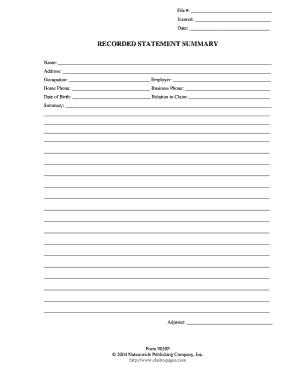
What to Know About Recorded Statements After an Accident
After an accident in Fort Lauderdale or anywhere in Broward County, it is common for insurance companies to request a recorded statement. Adjusters often present these statements as routine or harmless, suggesting they are necessary to “move the claim forward.” In reality, recorded statements are one of the most powerful tools insurance companies use to reduce, delay, or deny injury claims.
Understanding what to know about recorded statements after an accident is critical to protecting your rights under Florida law and avoiding mistakes that can permanently damage your case.
Why Insurance Companies Request Recorded Statements
Insurance companies request recorded statements early because timing works in their favor. Injured victims are often in pain, stressed, medicated, or unsure of the full extent of their injuries. Adjusters know that early statements are more likely to contain inaccuracies or damaging admissions.
Insurance companies use recorded statements to:
- Lock you into a version of events
- Identify inconsistencies
- Find admissions of partial fault
- Minimize reported injuries
- Create evidence to challenge your claim later
These statements are rarely requested for your benefit.
You Are Not Required to Give a Recorded Statement
In most cases, you are not legally required to provide a recorded statement to the other party’s insurance company. Even your own insurer’s request may have limits depending on the policy and circumstances.
Insurance adjusters may imply that refusing will hurt your claim, but that is often misleading. Giving a recorded statement without understanding the risks can be far more damaging than declining.
How Recorded Statements Are Used Against Injury Victims
Once recorded, your statement becomes permanent evidence. Insurance companies review it repeatedly and compare it against every other piece of information in your claim.
Adjusters may use statements to argue that:
- You admitted fault
- You were unsure how the accident happened
- You minimized your injuries
- Your story changed over time
- Your medical treatment was unnecessary
Even honest answers can be taken out of context and used strategically.
Questions Adjusters Ask for a Reason
Recorded statements are not casual conversations. Adjusters follow structured scripts designed to elicit responses that help the insurance company.
Common question types include:
- Questions about speed, distance, or reaction time
- Requests for speculation about what caused the accident
- Questions about prior injuries or medical history
- Inquiries about pain levels immediately after the accident
- Leading questions that suggest shared fault
Many of these questions are designed to get you to guess, speculate, or downplay injuries.
The Danger of Guessing or Speculating
One of the biggest risks in recorded statements is speculation. Accident scenes are chaotic, and it is normal not to remember every detail.
When you guess or say “I think,” insurers may later treat those guesses as facts. This is often used to support comparative negligence arguments under Florida’s modified negligence rules.
Statements About Injuries Are Especially Risky
In the hours or days after an accident, adrenaline often masks pain. Many injured victims say they feel “okay” or that injuries are minor—only to experience worsening symptoms later.
Insurance companies frequently use early statements to argue that:
- Injuries were not caused by the accident
- Pain developed later for unrelated reasons
- Treatment was exaggerated
This tactic is especially common in cases involving neck injuries, back injuries, and concussions.
Recorded Statements vs. Medical Records
Insurance companies compare recorded statements to medical records line by line. Any inconsistency, no matter how small, may be framed as dishonesty.
Examples include:
- Saying pain was mild but later reporting severe pain
- Forgetting to mention a symptom initially
- Giving different descriptions of the accident
Insurers often ignore context and focus only on discrepancies.
Recorded Statements and Comparative Negligence
Florida’s modified comparative negligence system allows insurers to reduce compensation by assigning fault to injured victims. Recorded statements are a primary source insurers use to support these arguments.
Even statements like “I didn’t see them” or “It happened so fast” can be twisted into claims of inattention or fault.
Social Media and Recorded Statements Together
Insurance companies often combine recorded statements with social media monitoring. Posts showing activity or positive moments may be used alongside statements to argue injuries are exaggerated.
What you say on the phone and what you post online are often analyzed together.
Why Recorded Statements Are Requested Early
Insurance companies often push for recorded statements before:
- Full medical evaluations are completed
- Imaging results are available
- Treatment plans are established
- Legal representation is involved
Early statements are easier to attack later.
Can You Correct a Recorded Statement?
Once a recorded statement is given, correcting it can be difficult. Insurance companies are rarely cooperative when claimants attempt to clarify or amend statements.
This is why caution before giving a statement is far more effective than trying to fix problems later.
What You Should Do If a Statement Is Requested
If an insurance company requests a recorded statement after an accident:
- Do not feel pressured to agree immediately
- Do not guess or speculate
- Do not minimize injuries
- Do not discuss fault
- Consider seeking legal guidance first
You have the right to protect yourself.
Why Legal Representation Matters Before Statements
An experienced Fort Lauderdale personal injury lawyer understands how recorded statements are used and can advise you on whether one is required and how to handle it safely.
Legal representation helps by:
- Determining whether a statement is necessary
- Preparing you for appropriate responses
- Preventing unfair questioning
- Handling communications with insurers
- Protecting your claim from early damage
Many injury victims unknowingly weaken strong cases by giving recorded statements without guidance.
Recorded Statements in Claims Beyond Car Accidents
Recorded statements are also commonly requested in:
- Slip and fall cases
- Premises liability claims
- Rideshare accidents
- Commercial vehicle accidents
- Uninsured motorist claims
In all of these cases, the risks are similar.
Common Mistakes Injury Victims Make
Injured victims often harm their claims by:
- Believing adjusters are neutral
- Trying to be helpful
- Answering quickly without preparation
- Speaking while medicated or stressed
- Assuming honesty alone is enough
Insurance companies rely on these assumptions.
Protecting Your Rights After an Accident in South Florida
If you were injured in Fort Lauderdale, Davie, Plantation, Hollywood, Sunrise, Pompano Beach, or anywhere in Broward County, understanding recorded statements can protect your right to compensation.
Once a statement is recorded, it cannot be undone.
Speak With a Fort Lauderdale Personal Injury Lawyer
If an insurance company has requested a recorded statement or you are unsure how to respond, help is available. A Fort Lauderdale personal injury lawyer can review your situation, explain your rights, and protect your claim from unnecessary damage.
Free consultations are available, there are no upfront fees, and you pay nothing unless compensation is recovered. Help is available 24/7 for injured victims across South Florida.